
The New Caledonia dFAD data collection programme
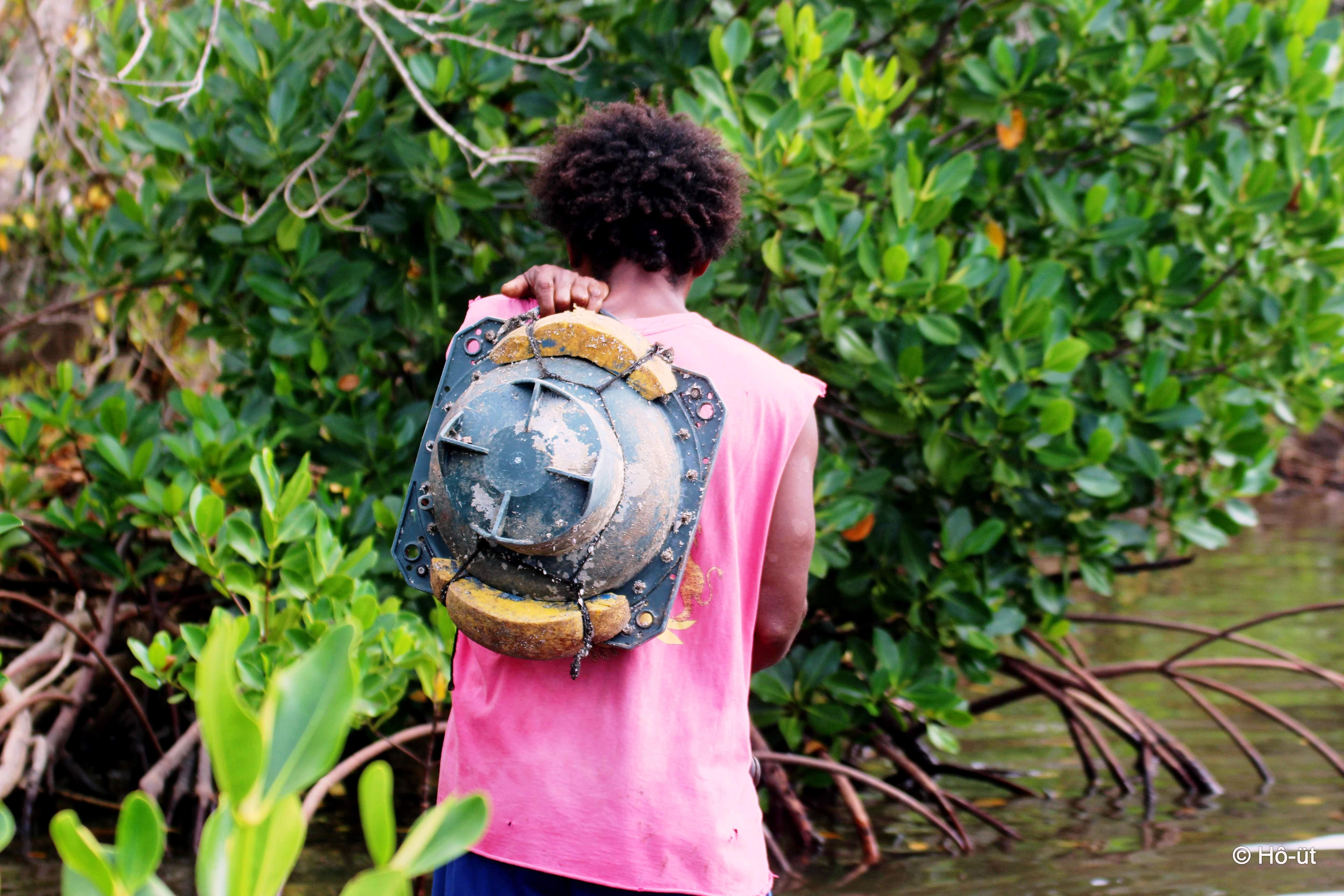
The SPNMCP is responsible for the collection of data on drifting Fish Aggregating Devices (dFADs) found in New Caledonia. © SPC
The objectives of the New Caledonia dFAD data collection programme and of the SPC regional dFAD environmental impact assessment programme are, at their respective levels:
- characterizing the drift and stranding patterns of drifting FADs;
- assessing the environmental impact of these phenomena;
- identifying the origin of the drifting FADs.
The results obtained inform discussions within the Western and Central Pacific Fisheries Commission (WCPFC) and contribute to improving regional FAD management. At the national level, it is essential for New Caledonia to document this phenomenon within its maritime jurisdiction in order to support its position within the Commission and to advocate for the reduction of impacts arising from fishing activities conducted outside its waters.
The New Caledonian dFAD data collection programme represents a key tool for improving knowledge of a phenomenon that remains poorly documented. By providing detailed information on the characteristics, condition, location and origin of stranded FADs, as well as on the marine and coastal environments they affect, reported observations enable a more robust assessment of their environmental impacts in New Caledonia.
The continuous updating of the local database strengthens analytical capacity and provides a solid evidence base to support New Caledonia’s contributions to WCPFC discussions. This work has also contributed to the evolution of regional management measures, including the prohibition of entangling netting in FAD structures, which has been in force in the Western and Central Pacific since 1 January 2024, and in the Eastern Pacific since 1 January 2025.
At the local scale, initiatives to reuse or repurpose certain dFAD components—such as batteries or solar panels—demonstrate practical community engagement. In addition, the reassignment of satellite buoys in good condition to anchored FADs (aFADs) in New Caledonia, implemented under an SPC programme in partnership with the Southern Province (RECON Project), illustrates the potential for adding value to these devices, particularly through the use of GPS tracking and echo-sounder functions to optimise monitoring and operational efficiency.
What is a drifting FAD?
Depending on the part of the FAD considered—namely the floating structure, its covering, or the submerged appendages—the materials used may differ. These floating devices are generally composed of:
- a floating component—a bamboo raft and/or plastic floats (yellow floats or PVC pipes), covered with nets, fabric or sometimes plastic tarpaulins (often black, to make them less detectable by competing fishers);
- a satellite buoy that allows owners to locate them;
- a submerged component that acts as an attractor for fish: a trailing appendage made of nets or ropes that can reach an average depth of 50 metres. These nets, particularly those with large mesh sizes, pose a high risk to marine fauna. They can also become entangled on coral reefs and, under the influence of currents, cause significant habitat degradation.
This technique is used in the Western and Central Pacific by purse seine tuna fisheries. Drifting FADs play a key role for these industrial fisheries, accounting for around 40% of the catches. They represent a significant source of revenue for some Pacific Island countries and territories.
However, although their use is regulated within the framework of the Western and Central Pacific Fisheries Commission (WCPFC), deployment has become intensive, with more than 40,000 drifting FADs deployed each year, a large proportion of which are lost or abandoned. This has led to marine pollution, and the stranding of these devices along the coasts of countries and territories in the region is now a major concern. Such strandings occur both in countries and territories where purse seine fishing is authorised (e.g. Marshall Islands, Tuvalu) and in those where no purse seine fishing is permitted (e.g. Cook Islands, French Polynesia, New Caledonia).
It should also be noted that anchored FADs are used for coastal fisheries. They help reduce fishing pressure on coastal reefs. In New Caledonia, as in other countries and territories, anchored FADs are authorised and provide benefits to local communities.
In New Caledonia, this phenomenon remains poorly known and poorly documented. However, drifting FADs have been observed offshore by New Caledonian fisheries observers and found stranded along the coast. Today, these drifting FADs—often abandoned—can cause environmental damage by destroying corals or entangling sensitive species such as turtles. They also pose a potential hazard to navigation. Consequently, in 2022 New Caledonia initiated its territorial drifting FAD data collection programme with the support of the Pacific Community (SPC).
Data collection in New Caledonia
Since 2022, when a drifting FAD is observed by residents or during field operations, the required information is collected using a dedicated form. Data centralisation is managed by the government (SPNMCP), which works in collaboration with the three Provinces, the Maritime Information Fusion Centre, and SPC.
An observation may consist of the floating structure (with or without its trailing appendage), the satellite buoy alone, or both. Priority information collected includes:
- the nature of the object: FAD without satellite buoy, FAD with satellite buoy, satellite buoy only;
- the buoy’s unique identification number;
- any markings on the buoy;
- the date of observation;
- the location of observation (latitude/longitude or name of beach, town, island, etc.);
- any environmental impact or trapped animals observed;
- and pictures.
Between 2015 and 2024, 96 observations of drifting FADs—either stranded or adrift—were recorded in New Caledonia across the entire territory: Grande Terre, Loyalty Islands, lagoon, Coral Sea Natural Park and remote islets (65 of these were recorded since the programme was launched in 2022). Most reports relate to FADs and/or buoys stranded on beaches (40.6%). Observations have also been recorded near coral reefs (18.8%), within the lagoon (10.4%) and inside mangroves (2.1%).
Where do drifting FADs come from?
Most drifting FADs reported in New Caledonia were deployed on the high seas near the equatorial Pacific, where the main fishing grounds are concentrated. Ocean currents, which generally flow from east to west across the Pacific, carry these FADs over thousands of kilometres to New Caledonia.
What should you do if you find a drifting FAD?
If possible, first take pictures and record the following information:
- the nature of the object: FAD without satellite buoy, FAD with satellite buoy, satellite buoy only;
- the buoy’s unique identification number;
- any markings on the buoy;
- the date of observation;
- the location of observation (latitude/longitude or name of beach, town, island, etc.);
- any environmental impacts or trapped animals observed.
Then contact the SPNMCP:
Coral Sea Natural Park and Fisheries Service
19, avenue du Maréchal Foch – Immeuble Foch, 9th floor
BP M2 – 98849 Nouméa Cedex
Email: merdecorail@gouv.nc
Tel.: +687 27 06 64